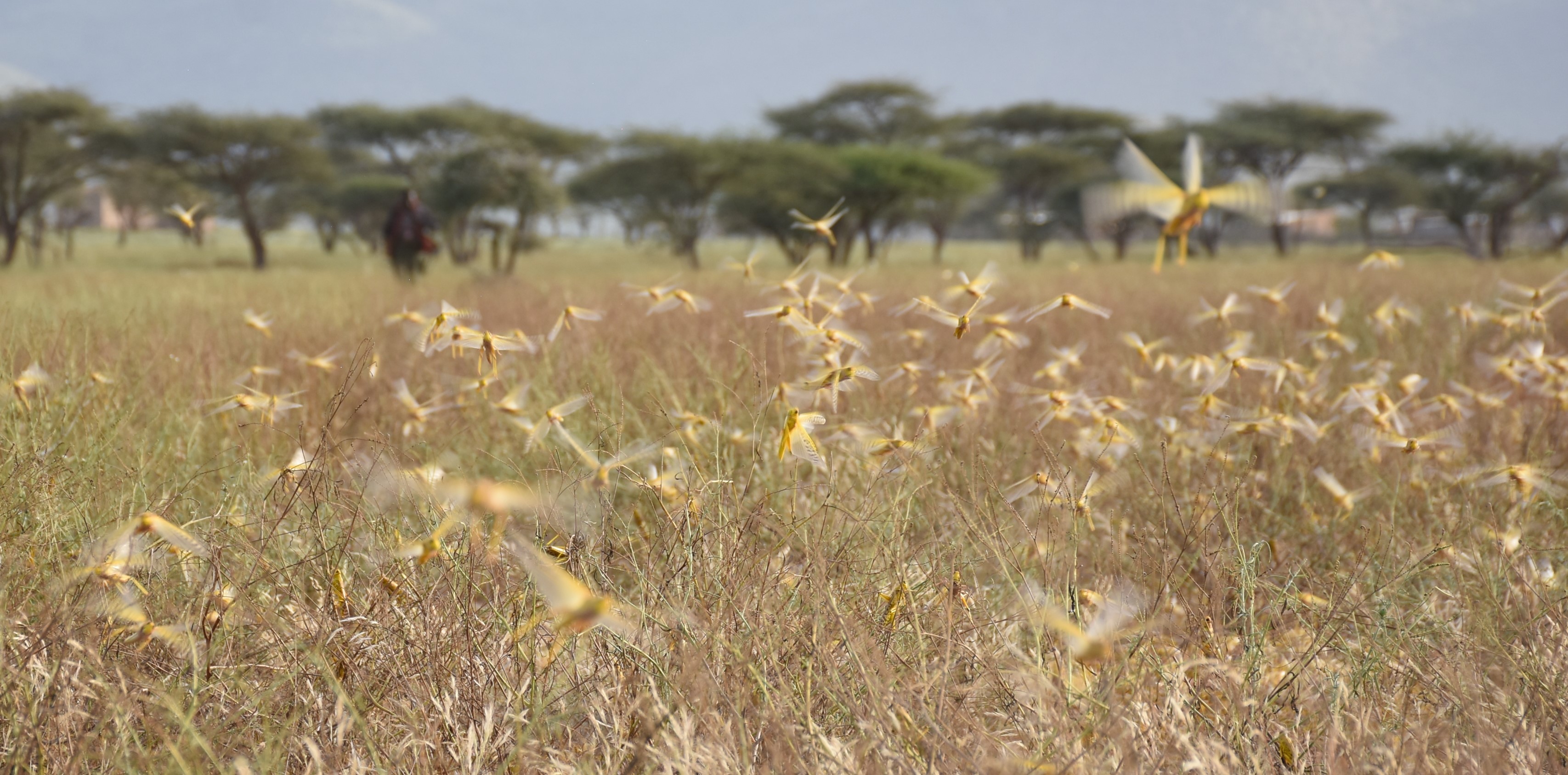
During the last week of December, a few swarms migrated towards the southwest and reached the edge of the Rift Valley in southern Ethiopia where they were reported on the 28–29th.
Since then, there have been no signs of additional migration towards southern Ethiopia and northern Kenya. Elsewhere, low numbers of solitarious adults are present along both sides of the Red Sea where winter breeding has started in Yemen and southeast Egypt.
The control operations carried out in northeast Somalia during the past month have dramatically reduced the number of swarms that formed in the past three weeks.
Nevertheless, a few immature swarms are still present in the northeast where they are likely to remain a bit longer than expected because local winds are concentrating them between Garowe, Las Anod, and Erigavo and delaying their anticipated migration south-westwards across eastern Ethiopia to the border of Kenya.
As conditions are drying out in northern Somalia, limited swarm movement is still expected to occur.
If any swarms reach the Kenya/Ethiopia border, easterly and southeasterly winds are likely to carry them towards the Rift Valley in northern Kenya and southern Ethiopia, preventing movement further south into central Kenya.
Consequently, vigilance and preparedness should be maintained in northern Kenya and southern Ethiopia throughout January in case any additional small immature swarms appear from the northeast.
The current level of resources should be sufficient to control the swarms before they become mature and ready to breed when the long rains commence in about April. Elsewhere, no significant developments are expected along both sides of the Red Sea.
Source: Food and Agriculture Organisation (Fao).