By Betty Luke
Women and girls in Northern Kenya continue to bear the brunt of climate change by walking longer distances in search of water for domestic use, lacking enough time to fend for their families.
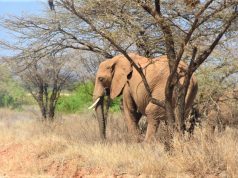
Cases of women being attacked or sexually assaulted while searching for water remain rife, with those living within local reserves at risk of marauding wildlife that sneak out of the parks in search of water and pasture.
Women in Burat ward, Isiolo County are among those who have taken deliberate steps to mitigate the effects of climate change by adopting new ways of life that are environmentally-friendly.
Some of the ways adopted by the indigenous communities in the ward include abandonment of tree-cutting and savings groups to help members access loans for economic empowerment and reduce their reliance on charcoal burning for source of income.
Through the Eveready Grassroots Network, the women are also educating their members on the best practices to avert effects of climate change.
“We initially relied on charcoal burning and used to cut down all the trees around our homes until we had none left. We would later realise that we had caused ourselves more harm than good and thought of embracing alternative sources of livelihood,” Network’s Chair Ms Halima Sheikh said.
The network has brought together 27 women groups, all undertaking different unique activities geared towards environmental conservation and achieving food security.
Ms Kuresha Bile notes that through the network, they have been able to undertake rotational grazing that prevents devastation on the rangelands and ensures livestock have pastures throughout the season.
“We no longer fight over resources because we have organised way of grazing where overgrazing is discouraged. We have regular meetings that bring together representatives from all the communities to establish clear plans on how to graze our animals,” she said.

During the meetings, the residents agree on the community to graze animals at a particular point and time, a practice they say has greatly assisted them conserve the environment.
The network hopes to buy land where they will establish a cultural center in the future.
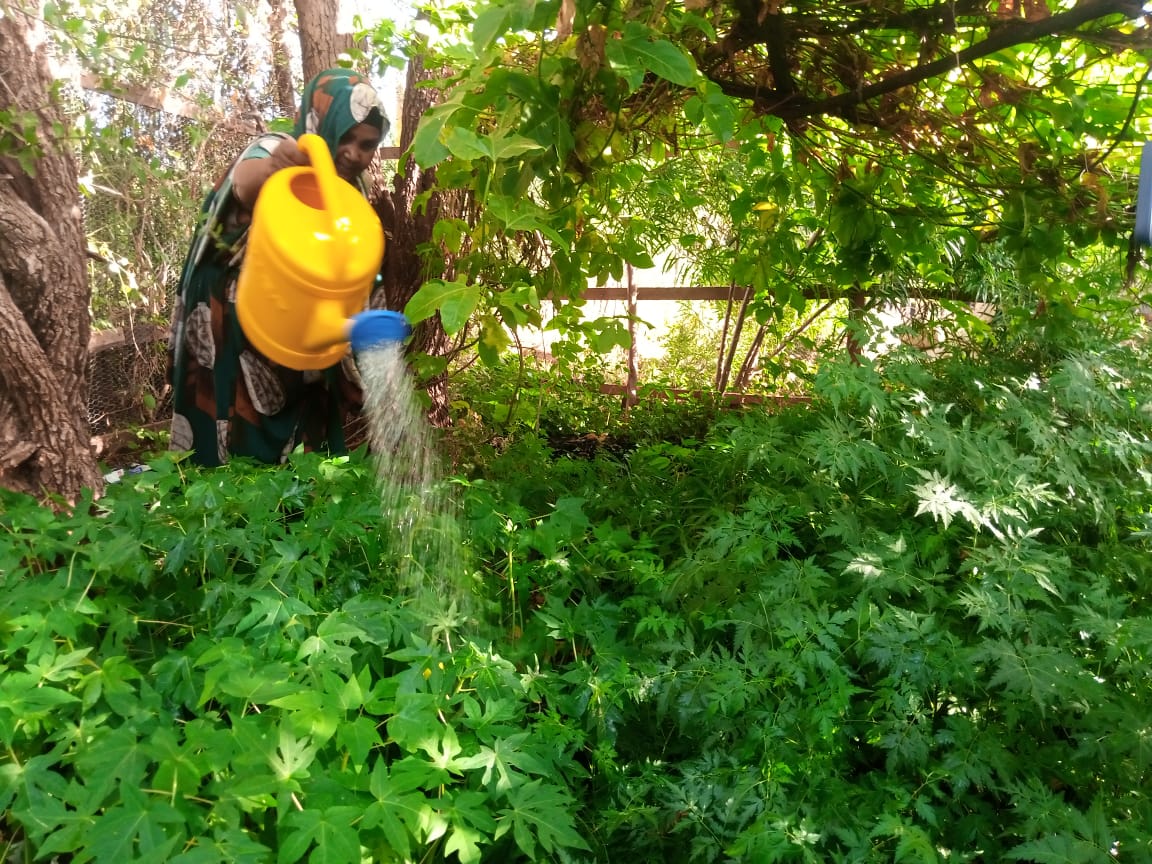
Marire Women group, one of the 27 groups, is involved in tree planting as an adaptation strategy to restore the ecosystem as well as ensuring sustainable economic growth.
According to the group Chairperson Ms Abdia Mohammed, their idea was born out of the desire to reverse effects of climate change which has wreaked havoc on livelihoods, impoverishing local communities that are predominantly pastoralist.
She says the ecosystem has been completely destroyed through tree felling and keeping of large herds of animals.
Majority of the residents, she says, lost their animals to the recent drought that was Kenya’s worst in 40 years and later realized there were no more trees to burn charcoal, forcing them to figure out a solution.
“The area was bare. No vegetation could be noticed. We realized there was the need to not only protect the few trees left but also plant more,” she told The Press Point.
One of the group members offered her piece of land where they started growing fruit and tree seedlings that they sell and donate to local institutions.
The group has since June last year planted hundreds of trees in public places and hopes to plant more as a way of encouraging other community members to participate in afforestation efforts to conserve the environment.
“We have so far planted over 150 trees in three public schools and two mosques and hope to increase the number every rainy season while ensuring they reach maturity,” she said during a recent interview.
School heads and Mosque staff are tasked to water the trees and ensure they do not dry up. Each seedling costs between Sh15 to Sh30 depending on the type and size.
Among the trees they have planted are pawpaw, passion, grevillea, and umbrella trees. Profit from the venture is ploughed back into the group’s savings account and later used to source more seeds.
Another group that is part of the network is Akienyi Farmers Field School which was started in 2013 with an aim of enlightening locals on the need to diversify into modern crop farming as pastoralism was proving unreliable due to climate change.
The group’s leader Ms Bille says due to lack of reliable supply of water for farming the area, the members have adopted different ways of farming that include the use of vertical bags that uses little water.
The group is currently farming vegetables for the local market.
“We have embraced agroecology for sustainable agriculture and food systems. We consume food that has no chemicals unlike when we used to rely on vegetables from the local market,” Ms Bille says.

Logoman Women Group, chaired by Ms Sheikh, engages in chicken rearing and recently ventured into beekeeping; activities that are increasingly being adopted by the pastoral communities.
The 25 members started off as a Village Savings and Loans Association (VSLA) group where they accessed loans to start income generating businesses after losing their animals to drought.
“Due to recurrent drought, we thought of ways through which we could earn a living while taking care of the environment and that is how we settled on chicken rearing and beekeeping,” she noted.
Each of the group members rears at least three chickens in their compound while Ms Sheikh takes care of the rest at her in Kilimani, Burat ward.
She says money from the sale of eggs is saved and issued out in form of non-interest loan once every month in line with the Sharia law since the majority of the members are Muslims.
“We are able to pay school fees for our children from our savings. We issue loans depending on the urgency of the members. If one wants to pay fees, we consider them first,” she says, noting that the income had helped ensure many of their children transit to Secondary Schools.
The group hopes to buy land and practice large-scale chicken-rearing in the future.
Kenya Platform for Climate Governance (KPCG) Northern region Co-ordinator and Isiolo Gender Watch Executive Director Grace Lolim notes that women in the Arid and Semi-Arid (ASAL) region play an important role in climate mitigation and adaptation.
She says there is a need for women to form groups that will guide their climate actions to avert further effects of climate change.
“Climate change can only be tackled through concerted effort and inclusion of all stakeholders as everyone is affected differently. The potential of women cannot be overlooked,” she told The Press Point.