By Betty Luke
Environmental Human Rights Defenders (EHRDs) working in Isiolo and Marsabit have appealed for stronger legal protections and greater recognition of Indigenous communities’ rights after the release of a new study documenting the challenges they face while defending the environment.
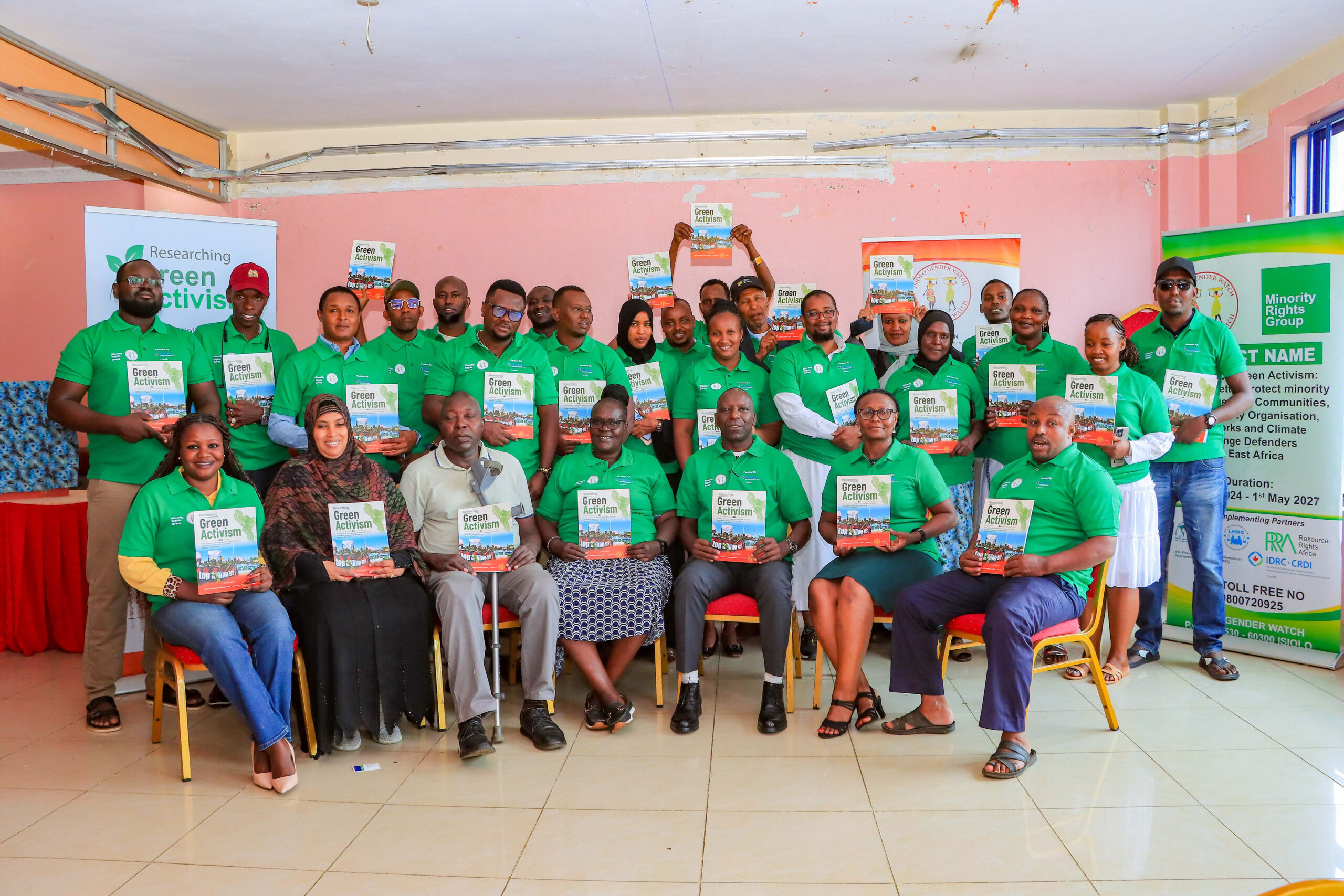
The research, conducted under the Green Activism Project, examines the state of civic space and environmental justice in the two northern counties.
It explores the experiences of Indigenous peoples, minority communities, civil society organisations and climate advocates, while proposing measures to improve their safety and participation in environmental governance across East Africa.
The findings reveal that many defenders continue to operate under difficult conditions, with reports of intimidation, harassment, arbitrary arrests, surveillance, violence and legal persecution linked to their advocacy on land rights, climate justice and environmental conservation.
Presenting the report, lead researcher Guyo Haro said environmental defenders often encounter a wide range of reprisals, including economic pressure, abductions and criminalisation.
The study further found that some activists are portrayed as enemies of development or accused of advancing foreign interests, while restrictive regulations affecting non-governmental organisations and access to donor funding have further constrained civic space.
Although awareness of legal protections was significantly higher in Isiolo than in Marsabit, the report noted that women, persons with disabilities and other marginalised groups remain underrepresented in environmental decision-making despite constitutional guarantees.
Researchers also established that unresolved community land registration continues to hinder development and limits communities’ ability to protect their natural resources.
Community land rights advocate Kuresha Bille expressed hope that the findings would prompt concrete government action.
“We hope this report informs how the government will protect us. We also hope they will promote and ensure the implementation of laws that take care of our environment,” she said.
In Marsabit, Centre for Research Rights and Development founder Mohammed Hassan said the project had strengthened the capacity of environmental defenders, enabling them to engage government institutions on practical environmental solutions.
“Through the capacity building sessions, we have begun conversations with the county government and other potential partners on how we can set up a recycling plant to support reduce non-biodegradable waste that continue to be illegally disposed,” he said.

The three-year International Development Research Centre (IDRC) funded initiative, was implemented by Minority Rights Africa (MRGA) in Kenya, Tanzania and Uganda through local development partners.
In Kenya the project was implemented by Isiolo Gender Watch (IGW), an organisation that promotes the rights of Indigenous women and girls.
MRGA Africa Director Agnes Kabajuni said environmental defenders continued to experience threats from multiple fronts, including government institutions, private companies and sections of local communities.
“Environmental defenders are faced with threats from the community, government and companies. Green Activism looked into these threats so that we can improve civic space and develop better strategies for the East African region,” she said.
She said the research captures the realities faced by grassroots defenders and will be used to inform advocacy and policy engagement with relevant institutions.
IGW Executive Director Grace Lolim said the study offers credible evidence on how shrinking civic space, climate change and weak protection systems continue to undermine the rights, livelihoods and participation of Indigenous communities in environmental governance.
“We must continue advocacy, community awareness, policy dialogue and monitoring to ensure the findings influence laws, development projects and climate governance at county, national and regional levels,” she said.
She called on national and county governments, security agencies and other state institutions to establish effective protection mechanisms for Environmental Human Rights Defenders while guaranteeing meaningful public participation in environmental decision-making.