By Betty Luke
Environmental Human Rights Defenders (EHRDs) in Isiolo and Marsabit counties are facing increasing threats that are silencing voices of accountability and weakening civic participation, a new report shows.
The survey by Isiolo Gender Watch revealed that defenders working to protect land, climate, and environmental rights are frequently targeted with intimidation, arrests, assault, and even abductions with Isiolo recording the highest cases of such abduction, reported by 88 percent of 356 respondents who participated in the survey.
Of the number, 182 were women and the rest men with the survey having involved three indigenous communities of Gabra, Rendille and Turkana.
Some 74 percent of the respondents cited witnessing arrests and 61 percent intimidation in Isiolo with Marsabit recording a lower percentage of 26 and 39 respectively.
In both counties, social pressure from the community was said to have been used to suppress activism with 60 percent of respondents in Marsabit and 40 percent of those in Isiolo accusing elders of perpetuating the vice to the EHRDs.
Fear was also mentioned as having been increasingly used as a silencing tool. In Marsabit, 64 percent of respondents admitted to remaining silent or inactive due to threats, while 69 percent in Isiolo said they overlooked rights violations to avoid conflict.
Disowning of defenders was notably high in Marsabit at 84 percent, adding a deep social burden to environmental advocacy.
The report, based on a household survey among minority communities in the two counties, sheds light on other systemic barriers to civic space.
Although the majority of respondents in both counties have internet access and basic education, their engagement in public policy processes remains low.
Civic participation is more vibrant in Isiolo, where respondents scored higher on access to information and civic engagement.
In contrast, Marsabit scored better in personal security, but its residents reported limited involvement on governance issues.
Drought emerged as the most pressing environmental threat in both counties, affecting 66 percent of households in Isiolo and 82 percent in Marsabit.
Other concerns include floods, invasive species like Prosopis juliflora popularly known as Mathenge trees and pesticide-related contamination from locust control.
Radio and community meetings are the main platforms used by communities to raise environmental concerns.
However, despite this, threats to those who speak up continue to erode public confidence in advocacy.
The report also highlights that NGOs and elders provide most of the support to EHRDs, while religious leaders offer minimal support. This leaves a gap in moral backing, especially in highly faith-driven communities.
On policy processes, Isiolo respondents reported low trust in transparency, with only 40 percent believing in open governance compared to 63 percent in Marsabit.
Still, many in both counties remained unsure—pointing to a need for better communication and awareness.
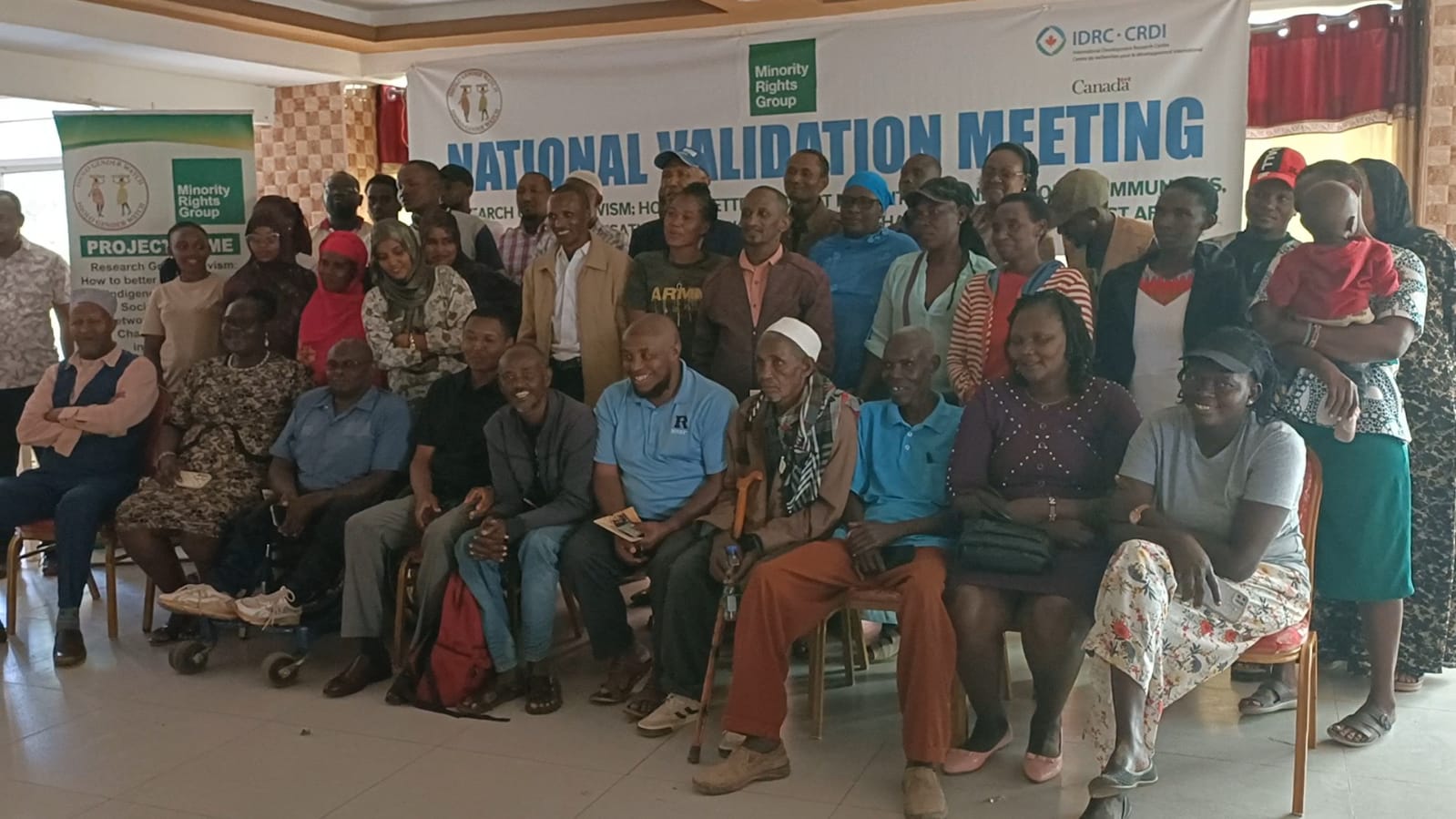
The report was unveiled during a national validation meeting under a project dubbed Research Green Activism – How to Better Protect Minority and Indigenous Communities, Civil Society, and Climate Change Defenders in East Africa.
The initiative is implemented by development partners in Kenya, Uganda, and Tanzania, with Isiolo Gender Watch leading the work in Isiolo and Marsabit counties.
According to IGW Executive Director, Grace Lolim, the research sought to establish how best to promote and support individuals and groups defending environmental rights, while also assessing community awareness on who climate defenders are.
She said that the findings would not only inform policies that better respond to the needs of the indigenous people but also guide budgeting for climate issues across Northern Kenya.
“The findings will help the government develop responsive policies to better protect civic space,” she said.