By Betty Luke
For a long time, residents in tens of villages in Isiolo’s Ngaremara ward have borne the brunt of inadequate access to water for domestic and livestock use, forcing them to walk for many kilometers in search of the scarce commodity.
Residents of Aroo and Aukot villages are among the victims but not anymore.
A 36-year-old Regina Napeiyok says they used to converge at a central point before embarking on the search for the commodity in Gambela and Matabithi villages and would sometimes return home with no water.
“We would spend a whole day walking to fetch a single 20-litre Jerican of water which forced us to ratio the commodity to ensure it lasts until the next day,” she told The Press Point.
On many occasions, the mother of three shares, children would sleep on empty stomachs as women came back late in the evening tired and sometimes having developed back and chest pains f carrying heavy loads for a long time.
The situation was the same at Attan village, where water shortage forced thousands of residents used to go for weeks without taking a bath as the available commodity was not enough even for domestic use.
Mr Matayo Ekale says the majority of the residents had relocated to Isiolo town after the stream they relied on dried up leading to intercommunal clashes due to scarcity of the resource.
“Majority of those living here have lost a loved one to bandits while searching water and pasture for the animals. Some moved to live with their relatives in other counties while others resolved to rent in town and survive on casual jobs,” shares the 70-year-old.

Depletion of pasture saw the majority of men leave for far areas, leaving women struggling to fend for their families.
“We are used to taking milk and when animals are moved to far places, families risk starvation. Children and the elderly suffer the most,” shares Mr Joseph Ekwam.
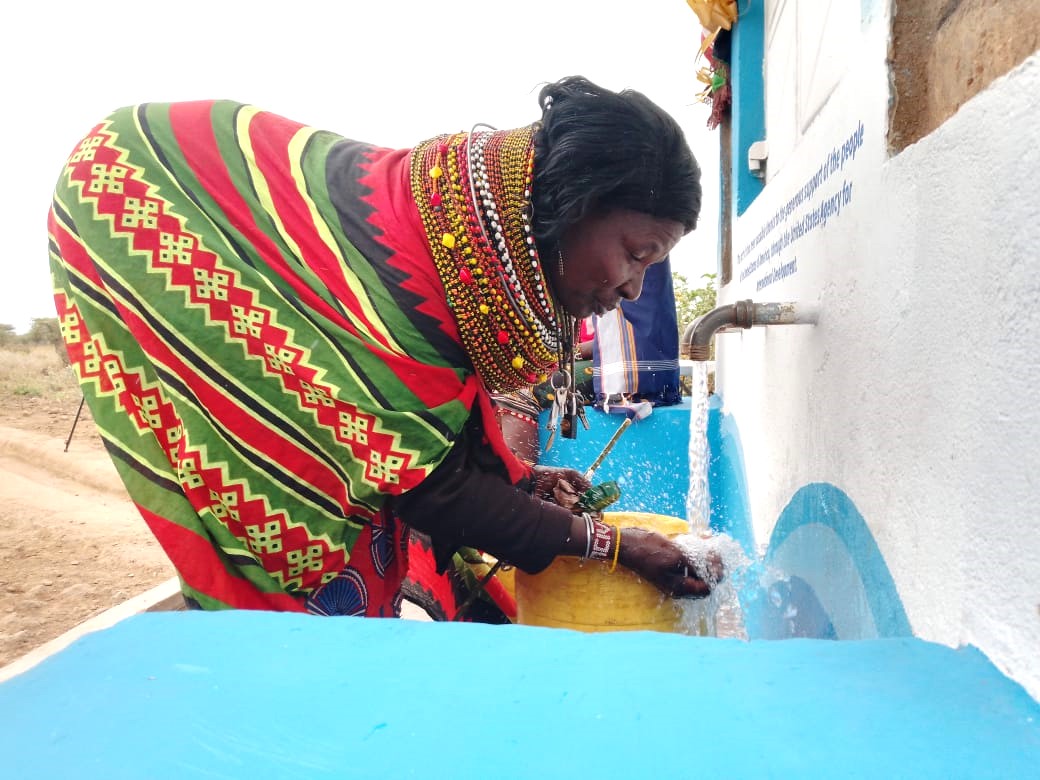
But the commissioning of two water projects in July last year has offered a huge relief to the residents who have now embarked on agro-pastoralism to counter climate shocks.
The projects, funded by USAID Nawiri project in partnership with the County Government, World Food Program (WFP), and Northern Rangelands Trust (NRT) among other partners sought to offer water for domestic, livestock, and farm use to reduce malnutrition in under-fives.
The projects entail high-yielding boreholes, solar pumping systems and elevated water tanks supposed to support farming activities in the areas benefiting 1200 and 300 households in Attan and Aroo villages respectively.
“Since water was made available, we are slowly shifting to farming alongside livestock keeping to ensure our children have access to a balanced diet,” notes Ms Elizabeth Akiru.
Speaking at her tomato farm just next to the water system in Attan village, Ms Akiru said their lives had greatly improved following the initiation of the water project that she termed as transformative.

The two villages that have previously borne the brunt of banditry are taking pride in Moran taking part in farming instead of herding, which they say encourages them to carry out cattle raids.
The farmers are growing vegetables, fruits, maize, and beans among other food crops that they say have not only enhanced their access to a balanced diet but also enabled them earn income from surplus.
“We have completely abandoned cattle rustling because we are engaged at the farms. Returns from the farm have supported us educate our children and start saving,” noted Mr Christopher Ekiru, a reformed bandit.
USAID Country Director David Gosney said the initiative had contributed to a reduction in the malnutrition rate among under-fives from 15 percent to the current 13 percent against the global rate of 17 percent.
He said through a concerted effort by different parties, they hoped to reduce the rate even lower by enhancing communities access a balanced diet.
Deputy Governor James Lowasa lauded the projects for contributing towards improved access to clean water for human consumption across the county which the county government was keen on.