By Betty Luke
Journalists and media practitioners from Meru, Isiolo and Tharaka Nithi counties have called for support to address mental health issues among their members.
The journalists said while they were among the essential service providers and first responders to different issues affecting the public, they rarely get support to address issues that affect them and their welfare at large.
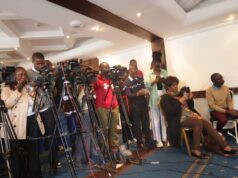
Speaking during a tournament aimed at creating awareness on mental health among journalists and media practitioners convened by Meru Press Club (MPC), they said it was prudent for the public to realize that they too deserved care and attention just like employees in other industries.
“While we respond and help address issues affecting the public, on rare occasions do we get help whenever we need it,” MPC Chairperson David Muchui said.
The event, that also sought to encourage journalists to speak out and seek help whenever they realize they are mentally unstable, offered the group an opportunity to access free psychosocial support.
Saying mental wellness was an individual responsibility, Kenya Psychological Association’s Publications and Communications Committee Chairperson Mugambi Mbaabu cited lack of adequate sensitization among the issues that were making it difficult for people to realize that they were mentally unstable.
“There exist over 300 mental disorders that effect human beings but majority of people think mental illness is simply being mad. There should be adequate sensitization to ensure people understand whenever they are sick and seek health services just like they do for other illnesses,” he said.
The medic noted that men were highly affected by mental disorders due to the societal expectations as well as fear of stigma, imploring them to to make advantage of the virtual counseling and psychosocial services at the comfort of their homes.
“We appreciate the digital health system that has seen an increase in the number of men seeking mental health services among other health services at the comfort of their homes using their gadgets,” noted Mr Mbaabu.

Mental Health Champion Moses Kimenchu alias Kaa Sober called on the journalists and media practitioners to always ask for help whenever they faced challenges in and outside their work environment.
“It is okay not to be okay and asking for help is not a sign of weakness. There is a need to speak to someone whenever you feel things are not as they should be,” he said.
Isiolo Press Club Chairperson Waweru Wairimu called on media owners to establish mechanisms that would enable their employees identify and address issues related to their mental wellness to ensure maximum productivity at work.
While decrying lack of substantial support by employers, he implored other journalists to sustain conversations around their wellness and shun indulgence in drug and alcohol abuse whenever they are mentally disturbed.
“Just like it’s mandatory for organizations to have a sexual harassment policy to provide clear ways to address such issues incase they occur at work places, a mental health policy should be established to ensure those affected access help with ease,” he said.
His Tharaka Nithi counterpart Alex Njeru called for more collaborations amongst journalists saying it would ensure journalists learn from each other and empower themselves through innovative ideas.
“Some of our members have lost their jobs due to alcohol addiction something that could have been prevented if we started creating awareness early enough. Such platforms could offer learning opportunities and help in addressing our emerging and pertinent issues for sustainable development,” said Mr Njeru.
Media Council of Kenya (MCK) Upper Eastern Regional Coordinator Jackson Karanja hailed the initiative terming it a step towards the right direction in addressing a horde of issues affecting journalists.
The official reiterated the council’s commitment to putting in place measures to address mental health issues among journalists and media practitioners.
He also urged stakeholders to offer the necessary support needed to ensure journalists undertake their mandate effectively and without interference.
A recent report by the council shows that over 60 percent of journalists across the country have faced different mental health conditions with work related pressure and environment cited as the major drivers.