A global expert in climate change negotiations has urged Civil Society Organisations (CSOs) to align their messages with those of government delegations to enhance the African position in the upcoming climate conference next month.
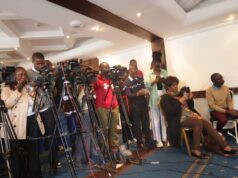
During a Pre-Conference of Parties to the UN Framework Convention on Climate Change meeting in Nairobi on Monday, an expert working with the African Group of Negotiators Support Dr George Wamukoya said that Africa needs to present concise and clear messages at COP26 with strong basis for positions taken, “otherwise, we risk being tagged as merely noise makers.”
The meeting was organised by the Pan African Climate Justice Alliance, Transparency International-Kenya, Care International and the Friedrich-Ebert-Stiftung (FES) Kenya Office.
Several participants including CSOs said issues such as compensation for loss and damage and funding adaptation projects are key priorities for Africa at the COP 26 though such issues are not a priority for the developed nations and have not been prioritised over the last COP meetings.
Bastian Schulz, the Kenya Resident Representative for FES noted that “the COP 26 outcome should deliver ambitious commitments that will provide predictable means of implementation for climate adaptation and mitigation especially on climate finance, capacity building and technology transfer for developing countries like Kenya.
Parties to the United Nations Framework Convention on Climate Change (UNFCCC) have been meeting annually since the convention came into force in 1994 with the 26th Conference of the Parties scheduled for next month.
The climate crisis has primarily continued to adversely impact livelihoods in developing countries like Kenya. In September this year, the government declared drought a national disaster.
PACJA Executive Director Dr Mithika Mwenda said climatic changes are already damaging African economies, despite having contributed the least to global warming and having the lowest emissions.
The changes pose even greater danger to infrastructure, water, public health and agriculture in the near future, if we do not consciously take measures to ensure communities are better prepared to deal with such challenges.
African countries have outlined bold aspirations to build climate resilient and low-carbon economies in their Nationally Determined Contributions (NDCs) to the Paris Agreement.
Having signed and ratified the Paris Agreement, nearly all African countries have committed to reducing their emission of greenhouse gases and supporting their communities to adjust and deal with the effects of climate change.
Under the Paris Agreement reached at COP21, all countries agreed to take collective action on climate change to keep global temperature increases to no more than 2°C above pre-industrial levels.