By Betty Luke
Stakeholders in the fight against Female Genital Mutilation (FGM) have been advised to adequately engage survivors who bear the negative effects of the human rights violation.
National Anti-FGM board Chairperson Surum Ipato said women who have been subjected to FGM clearly understand the complications that accompany the vice and have proven to be fully committed to protecting younger girls and women.
The official said the survivors voice and participation in the FGM fight could not be overlooked.
“Civil Society networks, county and national government have done a lot in the eradicating FGM but it is time we allow the survivors share their experiences and share us ideas on how to better the fight,” Ms Ipato said.
The World Health Organization (WHO) defines FGM as any procedure that involves partial or complete removal of the external female genitalia or other injury to the female genital organs for non-medical reasons.
The procedure has no health benefits but only leads to serious health conditions including severe bleeding, infections and serious condition during childbirth.
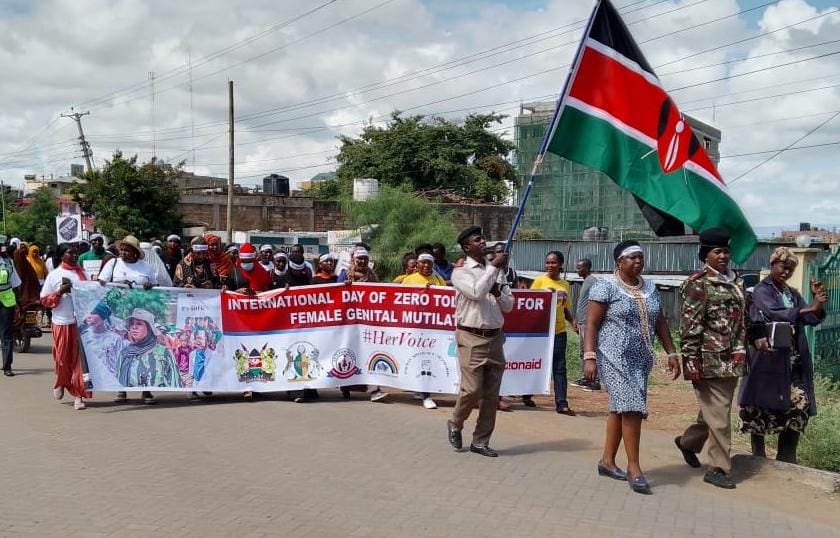
Ms Ipato spoke during an event to mark International Day of Zero Tolerance to FGM in Isiolo on Thursday.
This year’s theme Her Voice, Her Future calls for investment in survivor-led movements to end FGM.
“We should work closely with the survivors to help them come up with measures that will bear fruits. The survivors should work towards protecting both their family members and the girls around them,” she added.
The official decried the multiple effects associated with the cut and called on the survivors to fully dedicate themselves to ending the heinous act.
“FGM denies girls the right to education. A girl cut at 15 years is likely to be married off at 16 years and become a mother at 18. By the time she is 30 years old, she is already tired of living and has no basic skills. She cannot earn a living by herself,” the official, who is also an FGM survivor said.
Gender activist Anab Kassim called for increased religious leaders’ engagements so that they help demystify the myth associated with FGM and delink it from religion.
She hailed men from communities practicing FGM who had joined the fight.
“It is encouraging seeing men attend anti-FGM meetings because when we started the fight, they were nowhere to be seen. They were amazed that we were inviting them to discuss the ‘woman body’,” she noted.
Isiolo Gender Watch Executive Director Grace Lolim called on the communities not practicing FGM to join the fight noting that the issue was affecting everyone regardless of their religion or tribe.
“My community might not be engaging in the vice but my daughter could get married to someone whose community practices it. She will be in danger. We therefore need to call it as it is-a human rights violation,” said Ms Lolim.
More than 200 million girls in 30 countries in Africa, the Middle East and Asia have undergone FGM at some point in life.
Although significant progress has been made in fighting human rights violations in Kenya, FGM prevalence rate is at 15 percent which means 15 percent of girls and women aged between 15 to 49 years have been cut.