By Betty Luke
For six years, Ms Evelyn Kendi enjoyed teaching but closure of the school where she worked at and its inability to pay her full salary which made it difficult for her to afford basic needs made her settle for another option as she waited for the situation to normalize.
On March 15, 2020 President Uhuru Kenyatta while announcing the country’s second and third Covid-19 cases directed the Ministry of Education to suspend learning in all institutions in efforts to contain spread of virus creating financial crisis in private schools whose survival relies mainly on school fees.
The situation worsened as days passed by and the institutions ran out of cash, no support was forthcoming and eventually they could no longer sustain their employees.
The urge to earn a living pushed her to try her luck in business that is full of uncertainties but unaware, she would years later start coaching young people on how to start, run and sustain enterprises.
“The first month after closure we were paid full salaries but the following month I got half the pay which was not enough to settle a fraction of my bills,” she recalls.
The 29-year-old opened a cereal business at the back side of her rented single room as she could not afford to pay a separate room for business.
With a starting capital of Sh50, 000 that she had saved, Ms Kendi started off with 20 kilograms of beans, 30 kilograms of black beans, 50 kilograms maize, 25 kilograms of peas and a few other items.
“I had done a need assessment which showed that majority of the residents in the area were high consumers of cereals,” Ms Kendi said.

The business faced a horde of challenges in its first two months but the entrepreneur remained determined to sustain it despite facing recession.
By the third month, the enthusiastic lady had mastered the skill of retaining customers and her sales increased by nearly a half.
“Business requires one to develop a thick skin. I would on several occasions go for a whole day without selling anything but I never gave up,” she says, adding that she later expanded the venture to satisfy growing demand and attract more buyers.
She added foodstuffs such as flour, sugar, rice and vegetables into the list and says the business has since then proved to be lucrative because customers have gained confidence in her products.
The youth currently makes up to Sh200, 000 in a good month up from Sh11, 000 that she used to earn while a teacher but laments sales have reduced due to the high cost of living.
“A customer might prefer to only buy sukumawiki and sacrifice tomatoes while others buy milk and decide to forgo sugar unlike before when the cost of commodities had not risen,” she observes.
The trader says effective communication skills that she brought from the teaching profession have kept her in business despite the numerous challenges.
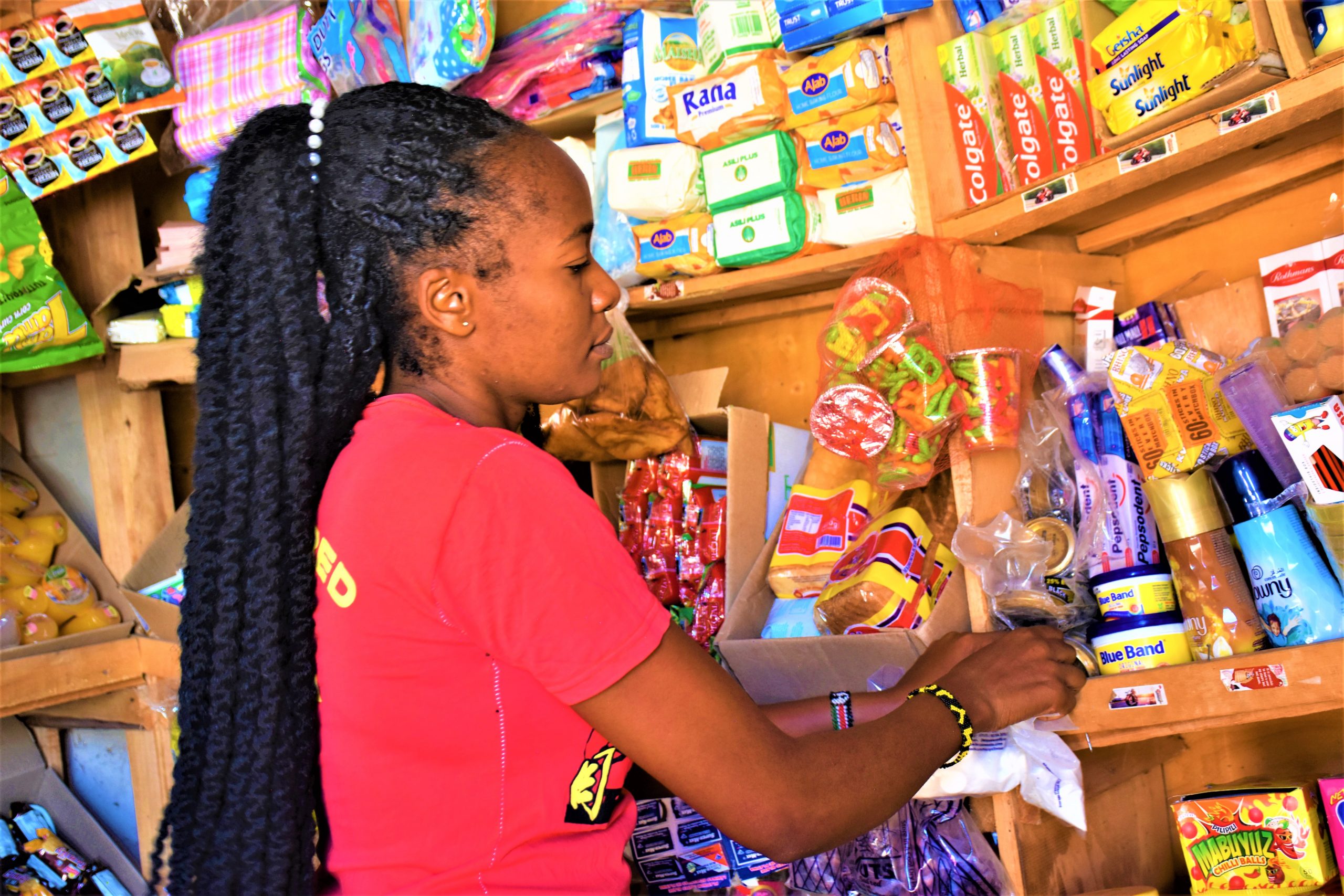
Ms Kendi’s idea gave birth to Eva One Stop, a general shop located in Kulamawe centre in Isiolo County that also equips young entrepreneurs with skills to start and run business for free.
Ms Kendi says the mentorship idea was borne out of her desire to assist young people start ventures without passing through the challenges she underwent while starting hers.
A total of 15 youths, including three teachers, who are now running their own ventures have benefited from the program.
Mr Hassan Abdi, who operates a green grocery, says the thought of venturing in business had never crossed his mind until he enrolled into Ms Kendi’s mentorship program.
The former teacher says the fear of letting go his underpaying teaching job almost blocked him from exploiting the entrepreneurial world.
“At first, I was reluctant to venture into business after going through the program because I feared getting frustrated but I do not regret making the difficult decision,” says Mr Abdi.
Ms Kendi offers marketing, saving and customer relation skills thrice a week in the evenings.
The two are among the more than 100, 000 private school teachers who were forced to go on unpaid leave as the institutions could no longer sustain them, according to the Kenya Private School Association (KPSA).
Isiolo County KPSA chair Mr Guyo Huqa Boru says just like teachers, the institutions were hardly hit by the pandemic and had no alternative source of income apart from the school fees.
This, he says, forced them into requesting teachers to take unpaid leaves.
“The schools were dealt a huge blow during the closure as majority of them had no sustainability measures. Some of the teachers who we sent on leave did not report back six months later when the schools reopened,” said Mr Boru.
Ms Hellena Apetu had for a record four times unsuccessfully tried business before she learnt of Ms Kendi’s initiative from her friend.
The trader reached out to the mentor and is now reaping big from her general shop in Kambi ya Juu area.
“Top on the list on things I learnt from the mentorship was customer relations, managing finance and establishing a saving plan,” she said.
The World Health Organization (WHO) says Covid-19 related restrictions had adverse effects on the livelihoods of Kenyan households as employment reduced by 21 percent at the start of the pandemic.
The biggest employment shock was felt in urban centers and among the more educated part of the population.
This publication was produced with the financial support of the European Union. Its contents are the sole responsibility of Betty Luke and do not necessarily reflect the views of the European Union.