By Betty Luke
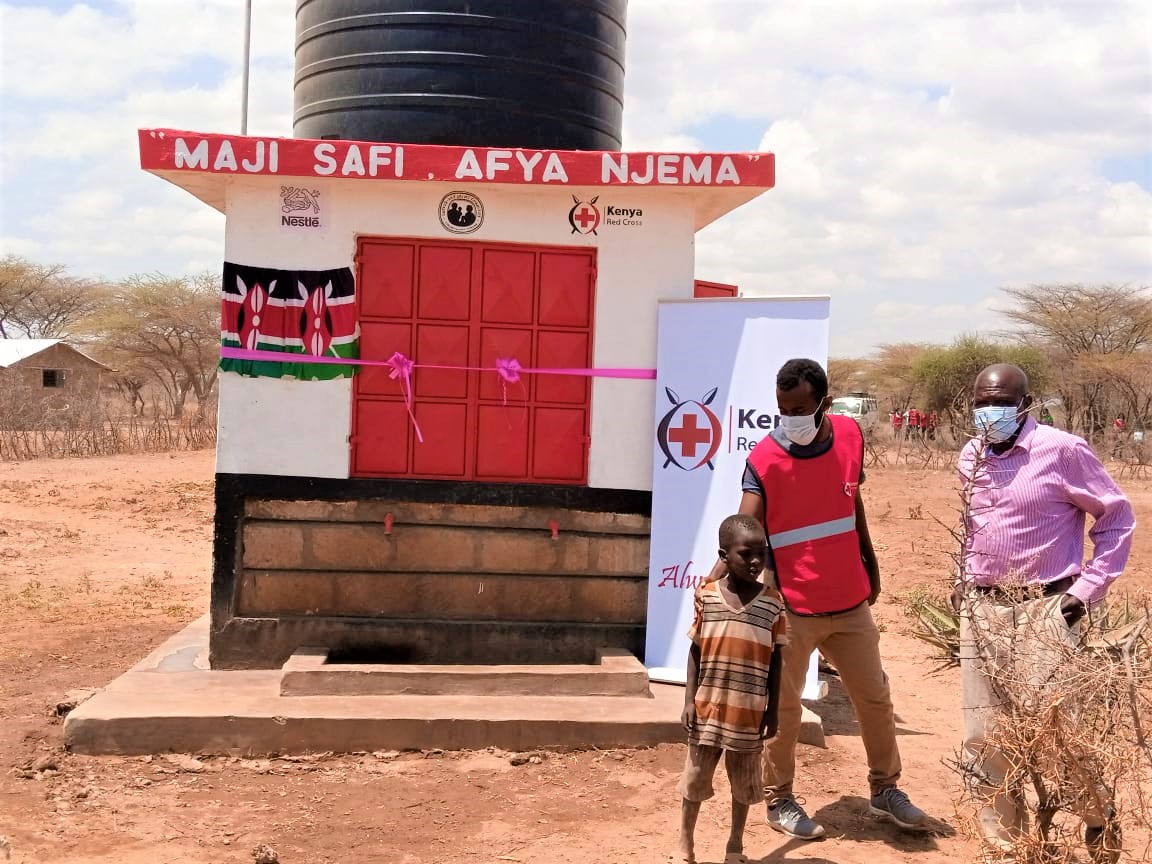
Aukot residents in Ngaremara, Isiolo will no longer have to travel for nearly 10 kilometers in search of clean water for domestic use following the completion of Sh13.5 million water project that is expected to benefit 1, 000 households.
The project, funded by Nestle-Kenya in partnership with Kenya Red Cross, seeks to ensure residents in the area and neighbouring villages access clean water.
The residents will be required to pay Sh100 monthly for maintenance of the borehole, water kiosk and the solar-powered pumping system.
Locals lauded the NGO terming the project a huge relief as they used to travel to Buffalo Springs Game Reserve to fetch ‘muddy’ water risking their lives in the wild.
They lamented that water shortage had resulted in intercommunity fights in the recent past and claimed several lives of herders.
“We are grateful that we will no longer be forced to struggle over the resource as we can comfortably fetch for our animals from the kiosk in the neighbourhood,” said Mr Michael Lotome, a village elder.
Mr Lotome added that their animals could now graze near the homestead as in most instances had to be driven to as far as River Ewaso Nyiro at the Isiolo-Samburu border.

Nestle Kenya Managing Director Ng’entu Njeru address journalists during the commissioning of the Sh13.5 million water station at Aukot village in Ngaremara, Isiolo County on August 12, 2021. PHOTO/PRESS POINT
Nestle Kenya Managing Director Mr Ng’entu Njeru said they identified the village as the neediest following drought situation assessment in several parts of the county.
“We conducted an impact assessment and identified Aukot village as one of the neediest and funded the project,” said Mr Njeru.
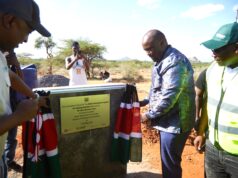
Speaking during the official commissioning of the project, Kenya Red Cross Society Secretary-General Dr Asha Mohammed appealed to the residents to ensure the sustainability of the project and maximally use it for improved livelihoods.
Dr Mohammed added that the organization was committed to providing clean water and sanitation for locals during the Coronavirus pandemic.
“With access to safe and clean water and community knowledge on hygiene sanitation practices, local communities are less susceptible to illness and the critical effects of drought in areas like Ngaremara,” she said.