By Betty Luke
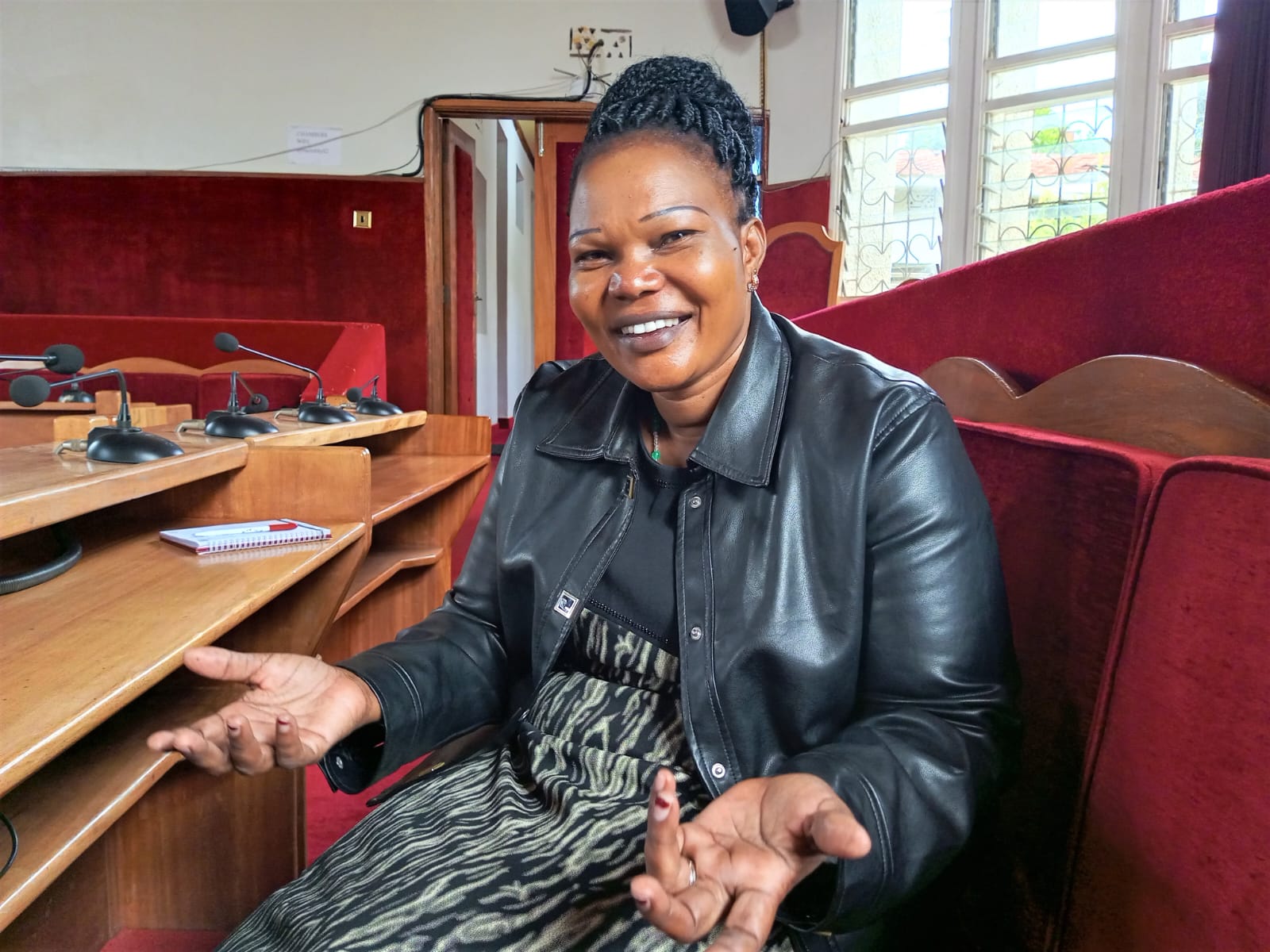
Sarah Lekirenyei’s journey to the Samburu County Assembly is one shaped by resilience, determination and an unwavering belief in justice and equality. Born in Samburu North’s Elbarta Ward, her life story reflects the struggles many girls in pastoralist communities go through.
Growing up in a community where girl child education is disregarded, Lekirenyei was not spared. As the first-born girl, expectations around marriage and domestic chores forced her out of school.
Naive, she was married off while in Class Seven, aged 16 years-old to a suitor she never chose by herself. She was however lucky to have been accorded an opportunity to take her Class Eight Kenya national examinations, while at her matrimonial home in 1996.
Child marriage is considered a violation of human rights with global data showing that 12 million girls get married every year before they reach age 18. In Kenya, the national child marriage prevalence is estimated to be at 23 per cent with one in every three girls in Samburu at risk.
“I had never met him nor been introduced to him. As a firstborn girl, my culture demanded that I get married so my family could get some cows and goats (as bride price),” she recalls.
Lekirenyei says her father even sent someone to burn her Class Eight results, but she prevented it, terming the experience among her most excruciating in her life.
“The family I married into agreed to support my education and later allowed me to take a two-year ECDE course,” she says.
The training opened a new chapter in her life. In 2013, she secured a job as an Early Childhood Development Education (ECDE) teacher, a position she served for a decade, impacting the lives of children from her community and beyond.
Working with young children strengthened her commitment to education and community service. During that time, she also witnessed the challenges girls faced, including the risk of early marriages that cut short their schooling.
“I always desired to join politics so that I could help young girls who are at risk of being married off…I knew one day my dream would come true,” she says.
Her leadership journey grew through community engagement and her role as a women’s leader in the Catholic Church. The platform gave her a strong grassroots following and an opportunity to mobilize women around social and political issues.
In 2022, her growing influence and immense contribution at the community level saw her receive a nomination to the Samburu County Assembly by the Jubilee Party.
At the county assembly, Lekirenyei is currently the Vice Chairperson of the Education Committee and also a member of the Labour, Roads and House Business committees.
Her experience as a teacher continues to guide her priorities. “As a committee, we push to ensure all ECDE centres have the facilities they need because those children deserve a good learning environment,” she says.
The committee regularly visits schools across the County to monitor enrollment and ensure that resources allocated to education are prudently used for their intended purposes. She says oversight remains critical in ensuring promises made in county budgets translate into real services for electorates.
Despite being forced into marriage at a young age, Lekirenyei takes a lot of pride in educating her children. Together with her husband, she has ensured their five children access the opportunities she struggled to find.
Her eldest child has already graduated with a Bachelo’rs Degree in Statistics and Mathematics, two are currently pursuing various courses in the university, another one pursuing Theology at the seminary, while the youngest is currently in Grade Four.
Determined to also complete her own education, she enrolled in adult learning and sat for her Kenya Certificate of Secondary Education (KCSE) in 2023, scoring D (plain) grade.
She says serving as a nominated MCA comes with challenges, including limited resources and public expectations.
“People imagine nominated MCAs have a lot of money and everyone expects support, yet there is very little set aside for us.We only rely on our salaries,” she says.
She also points to the growing problem of online abuse targeting women leaders noting it has greatly discouraged many from seeking elective positions.
“Social media trolling, abuse and insults are common, but I give them a deaf ear because what people call me is not who I am,” she says.
Lekirenyei also weighs in on negotiated democracy, a political arrangement often used in northern Kenya where elders determine who vies for particular positions or not.
While it seeks to reduce conflict, she says, the practice has isolated women who wish to contest for leadership positions.
“Elders sit and decide who vies for what position and at no point have they ever picked a woman except for the posotion of the Woman Representative. Whoever they nominate enjoys the community support, making it hard for women to compete fairly,” she says.
She adds that cultural barriers and lack of resources continue to hinder women from fully participating in politics.
“Women from my community do not own property or resources. Everything belongs to men, and that makes it difficult for women to fund their campaigns,” she notes.
Despite the existing challenges, Lekirenyei is set to contest for the the Elbarta MCA seat and believes her experience in community service and leadership has prepared her well for elective politics.
“I want to serve my people directly and continue advocating for education, justice and equality,” she says, hailing her community for increasingly embracing women leadership.
“Historically, elective leadership has been a preserve for men but today, women are rising. We are not yet there, but our eyes are open to seize existing opportunities.”