By The Press Point team
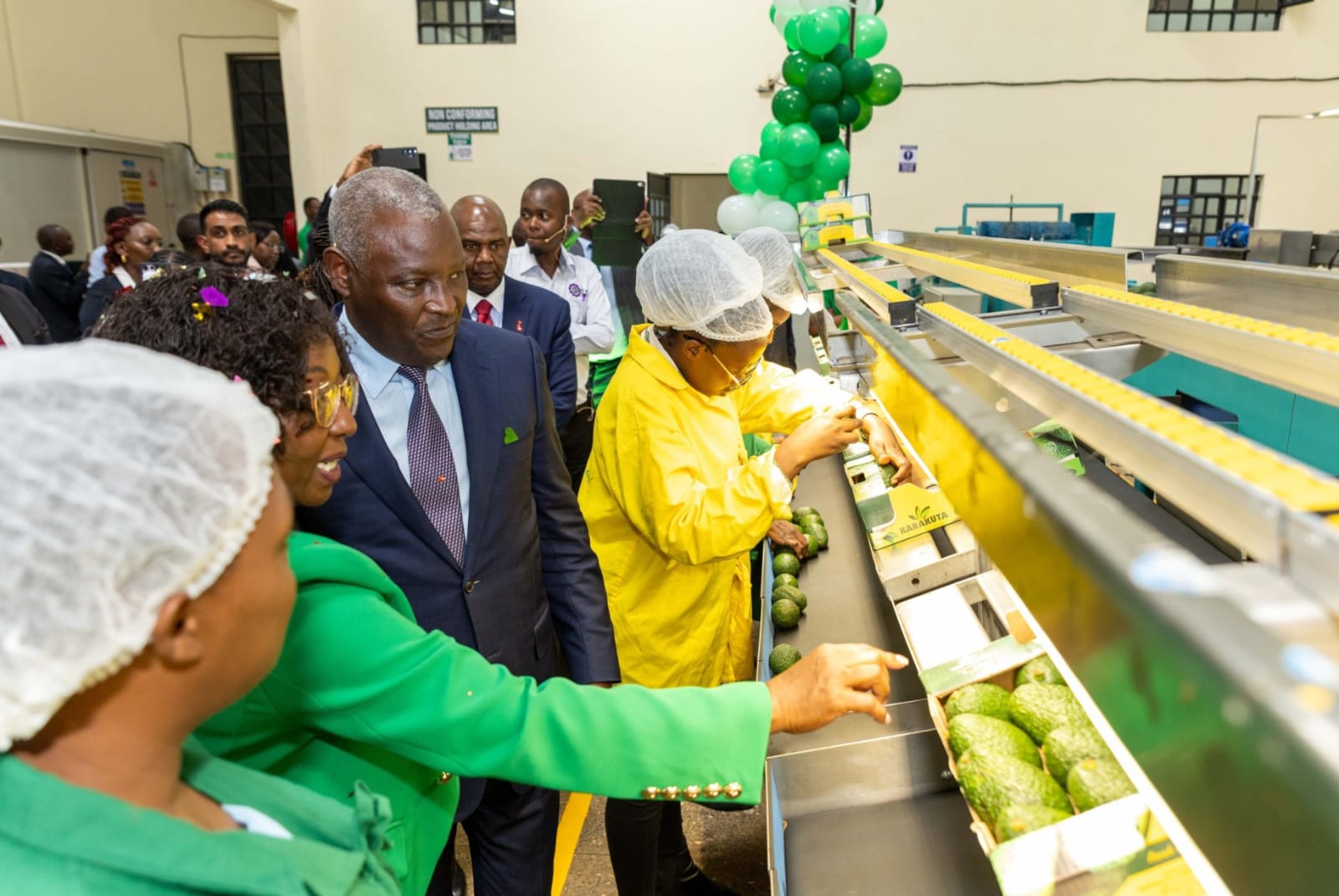
In a sector often dominated by men, Grace Ngungi is carving a name for herself and the country in the global avocado market. As the CEO of Karakuta Fresh Produce, she recently commissioned a state-of-the-art 7,500-tonne packhouse, a testament to her vision and determination to revolutionize the avocado value chain.
Karakuta will use the packhouse for grading and packing avocados grown on its 180 acres of farm and aggregated collection from 1,500 farmers in Kiambu, Nyeri, Kirinyaga, and Meru who rely on aggregators to deliver their produce to export markets.
The packing plant is one of the 52 in Kenya, and one of the 48 out of the 52 imported from Israel.
Ms Ngungi says her decision to establish the model farm was inspired by the desire to ensure Kenya not only produces but also exports for inconsistency in production.
“I wanted to be in a space where I can start as a smallholder fruits farmer and scale up to be in the avocado subsector. Kenya has always been rated among the largest producers of avocado but nowhere in the list of top exporters. This prompted me to establish a model farm as a starting point to address issues of consistency, quality, and working seamlessly with smallholder farmers,” she said.
Karakuta’s growth trajectory is impressive. From producing 8 containers of avocados in first year of harvest and soaring to 18 containers the following year. The number is projected to triple to 60 containers in 2025.
Her focus on quality and reliability is paying off, with buyers abroad competing for Karakuta’s produce with Spain accounting for the highest number of exports.
“The aggregators have built an infrastructure through social capital for trust to ensure farmers don’t lack inputs for their produce to meet market quality and quantity,” she said, adding that the facility financed by Equity Bank is a platform for transformation of the thousands of people who depend on the packhouse for their livelihood.
Grace’s vision extends beyond just production- she recognizes the importance of value addition in the agricultural sector which aims to increase lending to food and agriculture.
“Farmers have owned the firm and now treat it as their own. This has enabled us improve our quality as they offer feedback. We are glad that we represent the industrialization that Kenya needs and what Africa requires,” said the Karakuta CEO.
The packhouse was unveiled in Nairobi by Equity Group Managing Director and CEO Dr James Mwangi in a celebratory occasion graced by Spanish Embassy’s Economic and Commercial Office Market Analyst Enrique Alvarez and officials from government agencies and avocado value chain associations.
Horticultural Crops Director Dr Christine Chesar lauded the initiative and called on the firm leadership to seek emerging markets that are looking for volumes but are in need of consistency quantity and good quality products.
“Some of the challenges we have are meeting quality consistently and having a machine like Karakuta ensure quality is not compromised,” she said.
Avocado Exporters Association of Kenya Chief Executive Officer Joseph Wagurah revealed 70% of the fruit is grown by smallholder farmers making it difficult to maintain the quality required by markets.
“These farmers should be in groups which are easier to manage on agreeing on when to plant, when to spray and how much to ensure our produce doesn’t exceed specified maximum residue levels, MRLs.” he said.
According to Dr. Mwangi, Karakuta’s operations extend beyond mere business; he views the company’s purpose as actively transforming lives, instilling dignity, and creating broader opportunities for wealth generation within the community it serves.
“With such initiatives, it is easy to improve agriculture and transform lives and livelihoods. We are committed to continue supporting such initiatives that directly benefit farmers” he said.