By Betty Luke
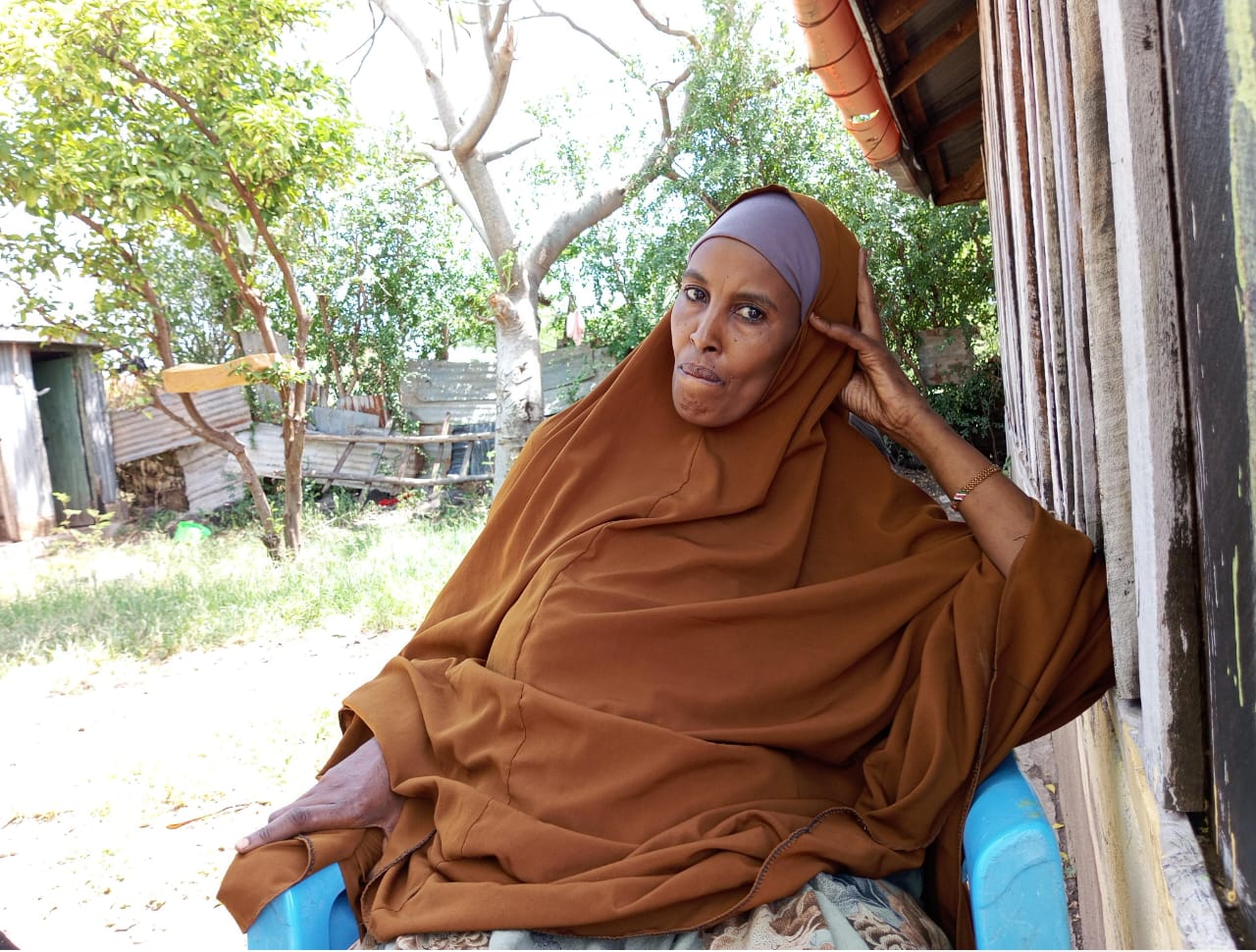
Naïve, young and innocent, Safia Adan Halakhe was subjected to Female Genital Mutilation while aged 10.
At the time, Halakhe had an inkling that it would hurt, but not the permanent effects FGM would cause to her reproductive life and also to her state of mind. She figured that the pain would subside with time and allow her to live a normal life.
That day, she remembers her mother escorting her to a neighbor’s house in an informal settlement in Nairobi County, where the procedure was to be undertaken.
In the community, the practice was openly embraced and as girls, we knew that between 8 and 10 years, we would undergo the cut.
“So when my time came, I was ready to face it head-on,” says Halakhe, as she recalls the violation she endured 32 years ago. After the operation, which she describes as excruciatingly painful and numbing, she got her legs tied together and her movement restricted to speed up the healing process.
“I experienced a searing pain that led me to think I would die. I became intensely bitter towards my mother, whom I felt was very heartless,” she says, her voice choking with emotion.
Her ordeal was not over yet. Halakhe suffered intense complications from the bleeding that lasted for over a month—only to learn later the impact would last a lifetime.
She felt betrayed by the people she trusted most, wondering why her mother, her aunties, and neighbors had not protected her from the ritual.
Although they insisted it was a rite of passage to womanhood, she couldn’t understand why womanhood would entail so much pain, suffering and fear.
Years later, she shares retreating from all those she thought had failed to protect her, including her biological parents who she later reconciled with after joining a support group that offered her a space to process the trauma and begin her healing journey.
As Halakhe grew older she developed a serious fear of friendship and intimacy. The physical wound wasn’t only on the outside of her skin but was deeply rooted in her brain as well.
“I realized I could not engage in relationship talks comfortably. Every time people spoke about relationships and marriage I saw betrayal. I was not ready for marriage because I had serious trust issues,” she shared.
The nightmare flashbacks exhausted her and wore her down, both physically and emotionallycasting a long shadow over her mental well-being.
The situation was worsened by the Borana community’s cultural expectations that a woman should act ‘strong’ and endure everything she goes through with confidence and courage.
“Speaking about one’s experience with FGM was a taboo. Anytime I thought of speaking about it, I would remember my neighbor’s words to her daughter that she was not the first one to be cut. She had even accused her (daughter) of attention seeking,” she recalls.
Ms Halakhe had very painful sexual experience on her wedding night, an experience that left her disinterested in intercourse. Her husband, she stated, threatened to marry another wife and accused her of failing to fulfill his conjugal rights.
“I never wanted to see him. Most times I slept on the coach so that I could avoid my husband. The pain was too fresh in my head,” she says.
Years later, she was heartbroken when informed that she would never conceive children in the normal way following doctors’ advice that she had undergone the worst form of FGM called infibulation, which is the complete – closing up of the vaginal opening with a seal. Caesarian Section delivery was her only option.
A mother of three today, she regrets not having more children due to the health risks associated with C-Section births.

Jamila Ibrahim’s life hang in the balance when she was forced to undergo the cut, leading to heavy bleeding that saw her admitted to hospital for one month. She was 8-years-old.
She recalls her parents warning her against disclosing who circumcised her as the doctors had threatened to take legal action.
“While at the hospital bed, my parents forced me to lie that I was forcefully cut by an old woman who later fled to Ethiopia. If I knew what awaited me, I would have said the truth,” she narrates.
Though she has gained confidence to speak up and help prevent young girls from being subjected to FGM, the trauma left long-lasting emotional wounds.
“I ended up being terrified of leaving my daughters in the hands of someone. I am afraid someone will abduct them and take them through what I experienced. I can never take them to visit their grandparents because to me, everyone is suspect,” Jamila shares.
The World Health Organization (WHO) refers to FGM as a harmful practice in which a portion or entirety of the external female genitalia is removed, or the genital organs are altered, for non-medical purposes.
FGM is not only physically detrimental but also leads to long-term psychological damage, including anxiety, depression, and post-traumatic stress disorder (PTSD), according to a 2020 UNICEF survey.
Dr. Mayian Lekirimpoto, a specialist in reproductive health working at Isiolo County Referral Hospital, explains that FGM survivors typically suffer from conditions such as post-traumatic stress disorder (PTSD), anxiety, depression and low self-esteem.
“Most of the women I have treated, have issues of trust, withdrawal, deep-seated fear especially regarding childbirth and sexual relationships. Unfortunately, these psychological effects are hardly treated because all the efforts are all directed to Zero Tolerance to FGM,” she adds.
She emphasizes providing mental health facilities in hospitals as a field that survivors can use for professional help without stigma.
“Survivors need a stigma-free place to have counseling and therapy. Health personnel also need training on the psychosocial areas of FGM so they may offer treatment services to these women,” Dr. Mayian asserts.
Dedicated to ‘heal’ and help others, Jamila and Safia joined the support group of other survivors where women share experiences, get counseling, and motivate each other to ‘reclaim’ their lives.
Baveria Self-Help Group of Bula village, an informal settlement on the outskirts of Isiolo town brings together survivors of FGM to share experiences and seek solutions among themselves.

Safia Wario, the group Chairperson, describes that their objective is to create a secure space where survivors can process their trauma, access mental health services, and lobby for the practice to cease.
She describes that she founded the group after recognizing that the majority of the survivors were experiencing mental health complications due to FGM, but no attempt had been made to help address them.
“Most of us were raised to believe FGM was a rite of passage, but we know better now the damage it causes. Through this group, we are healing together and protecting the next generation,” she continues.
With peer support and counseling, a number of women have regained their self-esteem and sense of purpose, speaking out to make their communities aware of the dangers of FGM.
I have not only become confident enough to tell my story but also to articulate freely against FGM. I visit schools and women groups to sensitize them on the adverse effects pertaining to FGM,” remarks Ms Halakhe.
While Kenya has a law that criminalizes FGM – The Anti-FGM law 2011 – , its enforcement is a challenge, especially where the practice is deeply rooted in societies. Activists argue more needs to be done to provide mental health treatment to survivors and increase grassroots organizing.
While Kenya has strong legal provisions that make FGM illegal, the Mental Health Act does not have clear provisions for survivors of FGM and therefore they are left without targeted care especially in government-run health facilities.
The National Policy for the Abandonment of FGM also focuses more on prevention while leaving psychosocial care for the already victimized behind.
Anab Kasim, an Isiolo-based women rights activist argues that although the state and non-state actors have in place robust mechanisms to address FGM, minimal effort has been made in the allocation of resources and policy making to promote mental well-being.
“Most survivors of FGM live with trauma for decades, but there are no organized mental health programs to assist them. The government must do more than criminalize FGM and offer meaningful solutions to survivors,” she adds.
She also insists that there must be an urgent review of the national health policies to incorporate mental health care for FGM survivors in public hospitals.
“If survivors can approach any hospital and get counseled by trained counselors who understand the extent of their trauma, it will help a long way in healing them,” she states.
Halakhe’s experience not only demonstrate the mental anguish survivors go through but also the endless effort they put to help them rise, heal, reclaim their voices to see to it that their well-being is taken care of.
She appealed to the government to incorporate programs targeting on survivors to the efforts that are aimed at ensuring Zero Tolerance to FGM in the country.
“FGM can end with us if we are fully involved in the existing frameworks. We understand the pain and therefore best placed to push for an end,” she reiterated.